Patients

Challenges and Opportunities in Gene Therapy for Inherited Retinal Diseases

Inherited retinal diseases (IRDs) caused by photoreceptor cell death are genetically complex and can vary greatly in severity and progression. Despite significant advances in gene therapies using AAV vectors, many IRDs still lead to vision loss due to the lack of effective treatments.

Diseases Associated with CRX Mutations

CRX-related diseases are a compelling target for gene therapy because they often involve a
loss-of-function mutation and occur in retinas where photoreceptors are still
present—offering a window of opportunity for intervention.

Technology_Our-Product

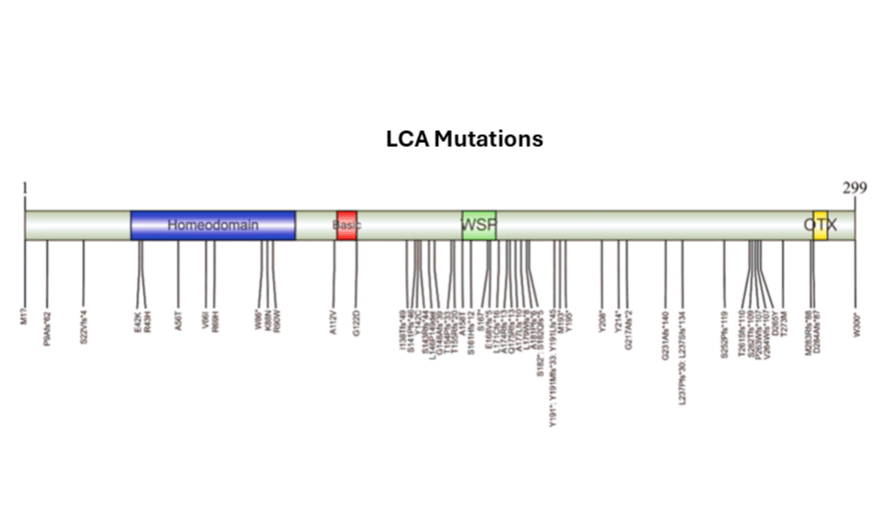
Leber Congenital Amaurosis (LCA)

LCA is a severe, early-onset inherited retinal disease characterized by profound visual impairment from birth or early infancy. It is caused by mutations in genes critical to photoreceptor development and function, including the CRX gene. These mutations impair photoreceptor signaling and survival, ultimately leading to early and irreversible vision loss.

Although most LCA cases follow an autosomal recessive inheritance pattern, CRX-associated forms may also follow dominant transmission. The presence of residual photoreceptor structure in early stages makes certain forms of LCA attractive candidates for gene replacement strategies using AAV vectors.

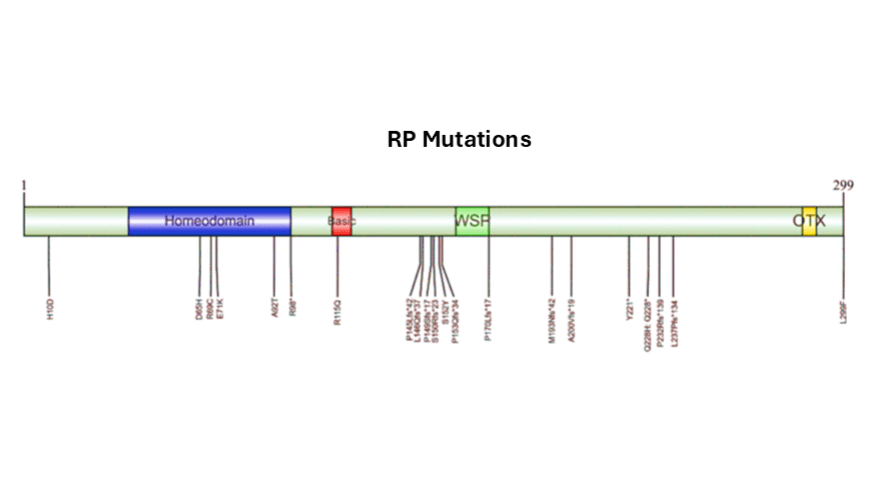
Retinitis Pigmentosa (RP) or Rod Cone Dystrophy (RCD)

Retinitis Pigmentosa refers to a heterogeneous group of inherited retinal degenerations that result in the progressive loss of photoreceptors. RP typically manifests with night blindness (nyctalopia) due to rod cell dysfunction, followed by gradual peripheral and, in advanced stages, central vision loss as cones become affected.

CRX mutations represent a subset of RP cases, often associated with dominant inheritance. These mutations disrupt photoreceptor gene regulation, leading to degeneration. While RP remains genetically diverse, certain forms involving regulatory genes such as CRX are especially suited for gene therapy approaches aimed at restoring functional gene expression and delaying degeneration.

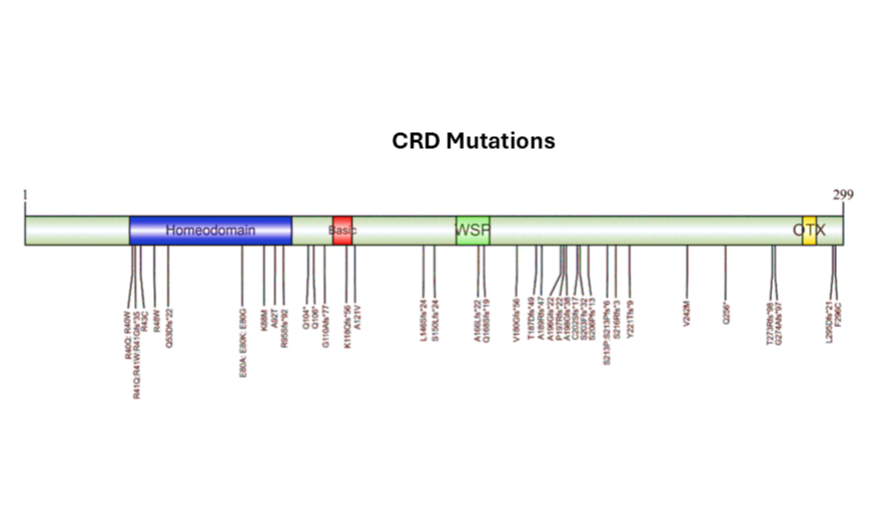
Cone-Rod Dystrophy (CRD)

Cone-Rod Dystrophy encompasses inherited retinal diseases where cone photoreceptors degenerate before rod photoreceptors. This results in early loss of central vision and color perception, followed by deterioration in night and peripheral vision.

CRX mutations are known to cause both autosomal dominant and recessive forms of CRD. As a key transcription factor in cone and rod development, CRX dysfunction compromises both photoreceptor types, with cones typically affected first. The molecular mechanisms and timing of degeneration in CRD present a clear therapeutic window for CRX-targeted gene therapy, especially in early or mid-stage disease.

LAB

Diseases Associated with CEP290 Mutations

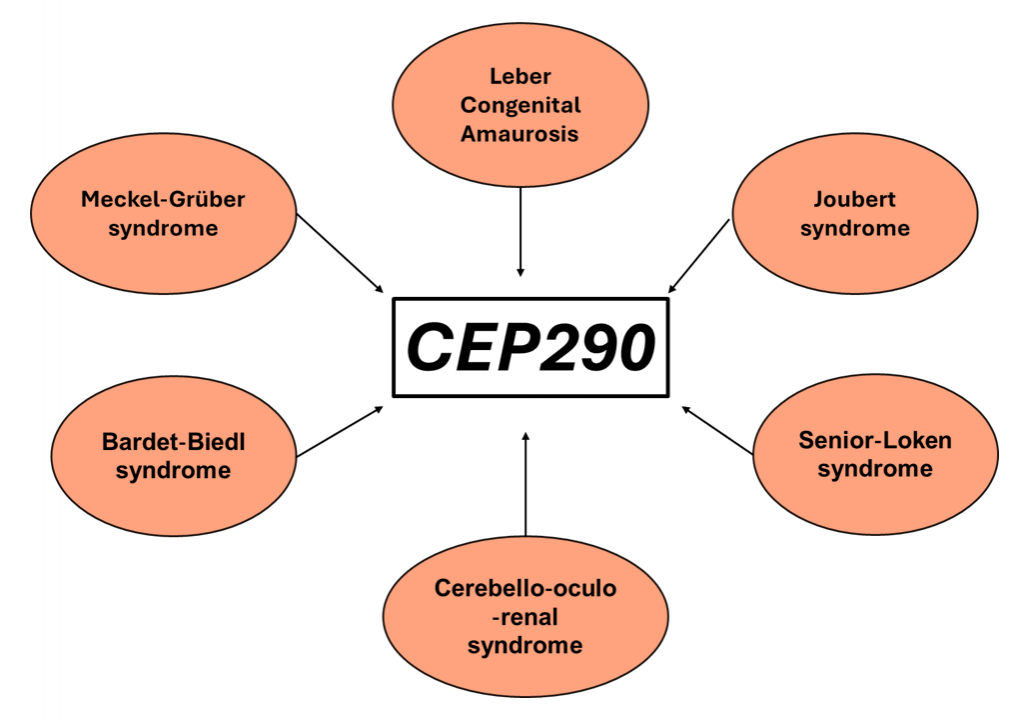
Mutations in CEP290 most commonly cause Leber Congenital Amaurosis type 10 (LCA10), one of the most severe early-onset retinal diseases. Children are born with very poor vision, often with nystagmus. CEP290 is essential for the internal “bridge” that allows photoreceptors to function properly. When the gene is defective, this structure fails, and photoreceptors gradually degenerate. Importantly, many patients retain some photoreceptors early in life, creating a potential window for therapeutic intervention.

Diseases Associated with NPHP1 Mutations

Mutations in NPHP1 can lead to Senior–Løken Syndrome, a rare condition affecting both the kidneys and the retina. The retinal component resembles an early form of retinitis pigmentosa. Children typically develop night blindness followed by progressive vision loss. NPHP1 is involved in maintaining the internal organization of photoreceptors; when it is faulty, the cells slowly deteriorate. In early stages, however, parts of the retina remain structurally preserved.
EQUIP
EXAM - Woman

Diseases Associated with PDE6B Mutations

Mutations in PDE6B cause autosomal recessive Retinitis Pigmentosa (arRP). Symptoms often begin with night blindness in childhood or adolescence, followed by gradual narrowing of peripheral vision and, later on, central vision decline. PDE6B is essential for normal rod photoreceptor signaling. When it is impaired, rods degenerate first, which then leads to secondary cone loss. Because cones persist longer, early treatment may help maintain remaining vision.